












Shopping for a Small SUV in 2027? See How the Subaru Forester Compares to the Honda CR-V
When shopping for a compact SUV in the Southern Tier, drivers frequently test-drive the Honda CR-V due to its strong nameplate reputation and refined interior finish[cite: 7]. But when Upstate New York drivers compare the vehicles side-by-side, daily usability and severe weather performance quickly come into focus[cite: 7]. With standard full-time all-wheel drive, expansive panoramic visibility, standard X-MODE traction control, and high ground clearance, the Subaru Forester is engineered specifically for winter snow, frost heaves, and active local lifestyles[cite: 7]. In this guide, we break down mechanical architectures, cargo usability, and local buying policies[cite: 7]. Explore our current 2026 models and incoming 2027 allocations in our new Subaru inventory on Vestal Road.
8.7" - 9.3"
Forester Ground Clearance
Standard
Symmetrical AWD
74.4 cu ft
Max Forester Cargo
Standard
EyeSight Active Safety
111.6 cu ft
Spacious Passenger Volume
OnePrice
Zero Over-MSRP Fees
Key Comparison Takeaways
- Standard Full-Time AWD: Every Subaru Forester features standard Symmetrical All-Wheel Drive with continuous power flow to all four wheels[cite: 7]. Adding all-wheel drive to the front-drive-based Honda CR-V requires paying an extra $1,500 factory surcharge[cite: 7].
- Superior Ride Height & Winter Clearance: The Forester delivers 8.7 inches of ground clearance standard (9.3 inches on Wilderness), easily clearing snowbanks and ruts compared to 7.8 to 8.2 inches on the CR-V[cite: 7].
- Panoramic Outward Visibility: Large greenhouse glass, low door sills, and ultra-thin A-pillars give the Forester an open cabin feel with minimal blind spots compared to the CR-V's higher beltline[cite: 7].
- Protected Upfront Pricing: While cross-shoppers at regional non-Matthews dealerships often encounter dealer add-ons or market premiums, Matthews Subaru adheres strictly to the Matthews OnePrice policy with zero markups over MSRP[cite: 7].
The Short Answer
The Honda CR-V remains a respected compact crossover with a polished cabin, but the Subaru Forester delivers better value, visibility, and winter confidence for Upstate New York drivers[cite: 7]. With standard full-time AWD on every trim, higher ground clearance, taller cargo access, and transparent upfront pricing through the Matthews OnePrice policy, the Forester is purpose-built for Southern Tier hills, snow squalls, and daily errands[cite: 7].
Local Salesperson Perspective
“When people stop by our showroom on Vestal Road cross-shopping the CR-V, I tell them to sit in the driver's seat and just look around[cite: 7]. The visibility in a Forester is incredible: you can see right down to the curb and over your shoulder without blind spots[cite: 7]. Then take it up the hills behind Binghamton or Endicott[cite: 7]. The CR-V drives primarily as a front-wheel-drive car until it slips, but the Forester's Symmetrical AWD is powering all four wheels every second you are moving[cite: 7]. Add in the fact that our OnePrice policy means no surprise dealer add-ons or markup games, and the Forester is tough to beat[cite: 7].”
Starting MSRP & Local Pricing Policy: The Matthews OnePrice Standard
Buying a new vehicle in Broome County should be simple, transparent, and respectful of your time[cite: 7]. At Matthews Subaru, we follow the Matthews OnePrice policy, ensuring our best price is clearly displayed online and on every window sticker[cite: 7]. We do not charge market adjustment fees or dealer markups above MSRP[cite: 7]. Cross-shoppers visiting traditional brand dealerships across the Southern Tier often encounter hidden dealer prep packages, mandatory add-ons, or surprise administrative markups on popular all-wheel-drive crossovers[cite: 7].
| Pricing Metric | Subaru Forester | Honda CR-V | The Matthews Advantage |
|---|---|---|---|
| Base Starting MSRP (Est.) | $29,995 (Standard Symmetrical AWD) | $30,100 (Front-Wheel Drive Only) | Forester starts lower with standard AWD included[cite: 7] |
| AWD System Surcharge | $0 (Standard on all trim levels) | +$1,500 (Optional add-on for AWD) | Matthews Advantage Zero AWD penalty[cite: 7] |
| Starting Price for AWD Model | $29,995 | $31,600 | Subaru saves you over $1,600 right out of the gate[cite: 7] |
| Dealership Pricing Policy | Matthews OnePrice Policy (No haggling) | Varies by dealer; traditional negotiation common | Clear prices posted on the glass[cite: 7] |
| Market Adjustment Surcharges | $0 (Never above MSRP) | Subject to individual dealer inventory markups | Protected purchase with no surprise fees[cite: 7] |
Southern Tier Winter Traction: Symmetrical AWD vs. Reactive FWD-Bias
Winter driving across Broome, Tioga, and Chemung counties demands continuous, dependable wheel traction[cite: 7]. Commuting along Route 17 or climbing steep residential grades toward Binghamton University can turn treacherous when rain freezes into black ice or sudden lake-effect squalls coat the road[cite: 7].
Every Subaru Forester utilizes Subaru Symmetrical All-Wheel Drive[cite: 7]. Power routes continuously through a horizontally opposed SUBARU BOXER engine mounted along the vehicle centerline[cite: 7]. Mechanical power flows actively to all four tires at all times[cite: 7]. Because all four wheels are constantly powered, the Forester maintains forward momentum without having to wait for the front wheels to slip on slick surfaces before engaging the rear axle[cite: 7].
In contrast, gasoline trims of the Honda CR-V are engineered on a transverse, front-wheel-drive platform[cite: 7]. In typical driving, 100% of engine power routes exclusively to the front wheels[cite: 7]. When front sensors detect wheel spin on an icy hill, an electronic clutch engages to transfer power to the rear wheels[cite: 7]. This reactive slip-and-grip delay can cause momentary wheelspin and loss of vehicle momentum when starting from a dead stop on an icy upgrade[cite: 7].
Furthermore, the Forester features available dual-function X-MODE with Hill Descent Control[cite: 7]. X-MODE recalibrates the electronic throttle, transmission mapping, and brakes to maximize grip in deep snow and mud, allowing the vehicle to crawl securely down slick grades without touching the brake pedal[cite: 7].
Exterior Dimensions, Visibility & Cargo Usability
While exterior footprints are similar, interior geometry creates a noticeably different ownership experience[cite: 7]. The Forester prioritizes an upright greenhouse with large side glass, thin roof pillars, and low window sills to provide unmatched panoramic sightlines in congested traffic or tight parking spots[cite: 7].
In terms of cargo access, the Forester features a wide, square rear liftgate opening that makes loading pet crates, bulky camping gear for Chenango Valley State Park, or home renovation supplies straightforward[cite: 7].
| Dimension / Space Category | Subaru Forester | Honda CR-V | Advantage |
|---|---|---|---|
| Standard Ground Clearance | 8.7 inches (9.3" Wilderness) | 7.8 to 8.2 inches | Forester Advantage Superior snowbank clearance[cite: 7] |
| Passenger Volume | 111.6 cubic feet | 103.5 cubic feet | Forester Advantage +8.1 cu ft open cabin volume[cite: 7] |
| Front Headroom | 41.2 inches | 38.2 to 40.0 inches | Forester offers more upright headroom[cite: 7] |
| Cargo Volume (Behind Row 2) | 29.6 cubic feet | 39.3 cubic feet | CR-V holds deeper load floor with seats up[cite: 7] |
| Max Cargo Volume (Row 2 Folded) | 74.4 cubic feet | 76.5 cubic feet | Both offer expansive utility; Forester has wider opening[cite: 7] |
| Driver Outward Visibility | Panoramic 360-degree glass, low beltline | Higher sills, thicker rear quarter pillars | Forester Advantage Superior sightlines & fewer blind spots[cite: 7] |
| Standard Roof Rails | Standard Raised Roof Rails (Most Trims) | Available on higher trims / Dealer accessory | Subaru includes standard outdoor gear readiness[cite: 7] |
Powertrains, Transmissions & Everyday Efficiency
The Forester is powered by a proven 2.5-liter naturally aspirated SUBARU BOXER four-cylinder engine paired with a Lineartronic CVT[cite: 7]. The horizontally opposed cylinder layout lowers the vehicle center of gravity, significantly reducing body roll through winding turns along the Susquehanna River[cite: 7]. The Honda CR-V uses a 1.5-liter turbocharged inline-four engine paired with a CVT[cite: 7].
| Powertrain Metric | Subaru Forester | Honda CR-V | Real-World Impact |
|---|---|---|---|
| Standard Engine | 2.5L 4-Cylinder SUBARU BOXER | 1.5L 4-Cylinder Turbocharged | Boxer engine lowers center of gravity for stable handling[cite: 7] |
| Horsepower / Torque | 180 hp / 178 lb-ft | 190 hp / 179 lb-ft | Comparable real-world passing response[cite: 7] |
| Transmission | Lineartronic CVT with manual mode | Continuously Variable Transmission (CVT) | Both deliver smooth, shift-free highway efficiency[cite: 7] |
| EPA Fuel Economy (AWD City/Hwy) | 26 / 33 MPG | 27 / 32 MPG | Virtually identical highway fuel efficiency[cite: 7] |
| Maximum Towing Capacity | 1,500 lbs (Up to 3,000 lbs on Wilderness) | 1,500 lbs | Forester Wilderness Double the towing limit for trailers[cite: 7] |
| Fuel Tank Capacity | 16.6 gallons | 14.0 gallons | Forester (+2.6 gal) Longer cruising range between fill-ups[cite: 7] |
Active Safety: Subaru EyeSight vs. Honda Sensing
Both crossovers prioritize driver safety, but their sensor architectures behave differently during Upstate winter weather[cite: 7].
Every Forester comes standard with Subaru EyeSight Driver Assist Technology[cite: 7]. EyeSight relies on dual optical stereo cameras mounted securely inside the windshield behind the sweep of the wiper blades[cite: 7]. This internal placement shields the primary sensors from front bumper snow accumulation, mud, and road salt spray[cite: 7]. Standard features include Pre-Collision Braking, Advanced Adaptive Cruise Control with Lane Centering, and Lane Departure Warning[cite: 7].
The Honda CR-V uses Honda Sensing, which combines a windshield camera with an exterior grille-mounted radar sensor[cite: 7]. During heavy winter squalls on Route 17 or I-81, wet road slush can coat the exterior grille sensor, causing the system to temporarily deactivate radar-reliant cruise control features until manually cleaned[cite: 7].
Factory Warranty & Scheduled Maintenance Coverage
| Coverage Plan | Subaru Forester | Honda CR-V | Advantage |
|---|---|---|---|
| Basic Bumper-to-Bumper Warranty | 3 Years / 36,000 Miles | 3 Years / 36,000 Miles | Equal comprehensive coverage[cite: 7] |
| Powertrain Limited Warranty | 5 Years / 60,000 Miles | 5 Years / 60,000 Miles | Equal major powertrain protection[cite: 7] |
| Roadside Assistance | 3 Years / 36,000 Miles (24/7) | 3 Years / 36,000 Miles | Equal emergency roadside assistance[cite: 7] |
| Dealership Loyalty Program | Matthews Rewards Plus: Up to 25% Back | Standard dealership retail pricing | Matthews Advantage Service loyalty credits[cite: 7] |
Which Small SUV Best Fits Your Daily Routine?

The Subaru Forester Is Built For You If:
- You commute on untreated roads where 8.7 inches of ground clearance keeps you from dragging on snowdrifts[cite: 7].
- You demand full-time Symmetrical AWD with standard balanced power for icy hills and driveways[cite: 7].
- You prioritize panoramic outward visibility with low window sills and thin structural roof pillars[cite: 7].
- You carry large dogs or bulky recreational gear and need a wide, square tailgate opening[cite: 7].
- You want standard integrated roof rails ready for outdoor sporting accessories[cite: 7].
- You value a transparent buying process backed by the Matthews OnePrice policy[cite: 7].
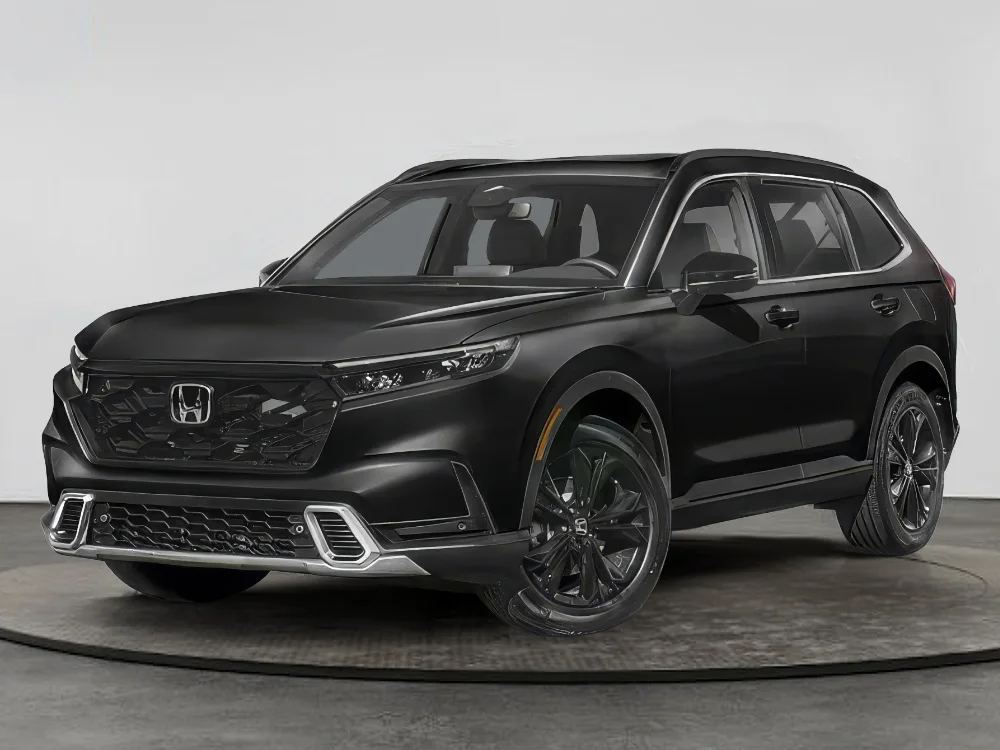
The Honda CR-V Might Suit You If:
- You primarily drive flat, cleared interstate highways where front-wheel drive is sufficient[cite: 7].
- You prioritize maximum cargo volume behind the second row over open upward headspace[cite: 7].
- You prefer a more enclosed, cockpit-style dashboard console[cite: 7].
- You are willing to pay an additional $1,500 factory surcharge to equip your vehicle with all-wheel drive[cite: 7].
- You are comfortable negotiating pricing and optional add-ons at traditional dealerships[cite: 7].
Why Buy Your Next Small SUV at Matthews Auto?
- Matthews OnePrice Policy: Under our Matthews OnePrice policy, we never sell above MSRP, even on high-demand, popular new vehicles[cite: 7]. Prices are clearly posted online and on the lot with zero haggling required[cite: 7].
- No-Pressure Sales Consultants: Our sales consultants are knowledgeable local neighbors whose primary role is to listen to your needs and share transparent vehicle details, ensuring an informative and pressure-free environment[cite: 7].
- Matthews Rewards Plus: Earn up to 25% (up to $5,000) towards your next vehicle purchase, just by servicing your vehicle at any Matthews Auto location[cite: 7].
- FreshStart Financing: Our dedicated credit specialists partner with regional credit unions and national financial institutions to assist buyers across all credit backgrounds[cite: 7].
Frequently Asked Questions
Why is Subaru Symmetrical AWD considered superior to Honda Real Time AWD in winter conditions?
Subaru Symmetrical All-Wheel Drive is an active, permanent system sending power continuously to all four wheels along a centered longitudinal Boxer layout[cite: 7]. Honda Real Time AWD is built on a front-wheel-drive platform that cruises with front power and sends torque rearward only after electronic sensors detect front slippage[cite: 7]. This reactive delay can cause hesitation on steep, icy hills around Binghamton and Vestal[cite: 7].
How does outward driver visibility compare between the Forester and CR-V?
The Subaru Forester is engineered with thin structural pillars, low window sills, and large panoramic greenhouse glass, providing exceptional outward sightlines in all directions[cite: 7]. The Honda CR-V features higher beltlines and thicker rear roof pillars that create larger blind spots when parallel parking or merging on Route 17[cite: 7].
Do I have to pay extra for All-Wheel Drive on the Subaru Forester?
No[cite: 7]. Symmetrical All-Wheel Drive comes standard on every trim of the Subaru Forester[cite: 7]. Competitors like Honda build base CR-V models in front-wheel drive and charge approximately $1,500 extra to add all-wheel drive[cite: 7].
Does Matthews Subaru charge market adjustments or unexpected dealer fees on the Forester?
No[cite: 7]. Under the Matthews OnePrice policy at our Vestal location, we never charge market adjustment fees or dealer markups over MSRP[cite: 7]. All pricing is clearly posted online and on the lot with zero haggling required[cite: 7].
Vehicle Comparison Disclaimer: Specifications, features, fuel economy ratings, pricing, and comparative data for the Subaru Forester and Honda CR-V are based on the latest available manufacturer data at the time of publication[cite: 7]. Equipment, towing ratings, dimensions, and availability can vary by specific trim level, option packages, and production cycles[cite: 7]. Always review official window stickers and vehicle owner manuals for complete operating specifications[cite: 7]. Visit Matthews Subaru at 3013 Vestal Road, Vestal, NY, to verify current inventory availability and vehicle details[cite: 7].